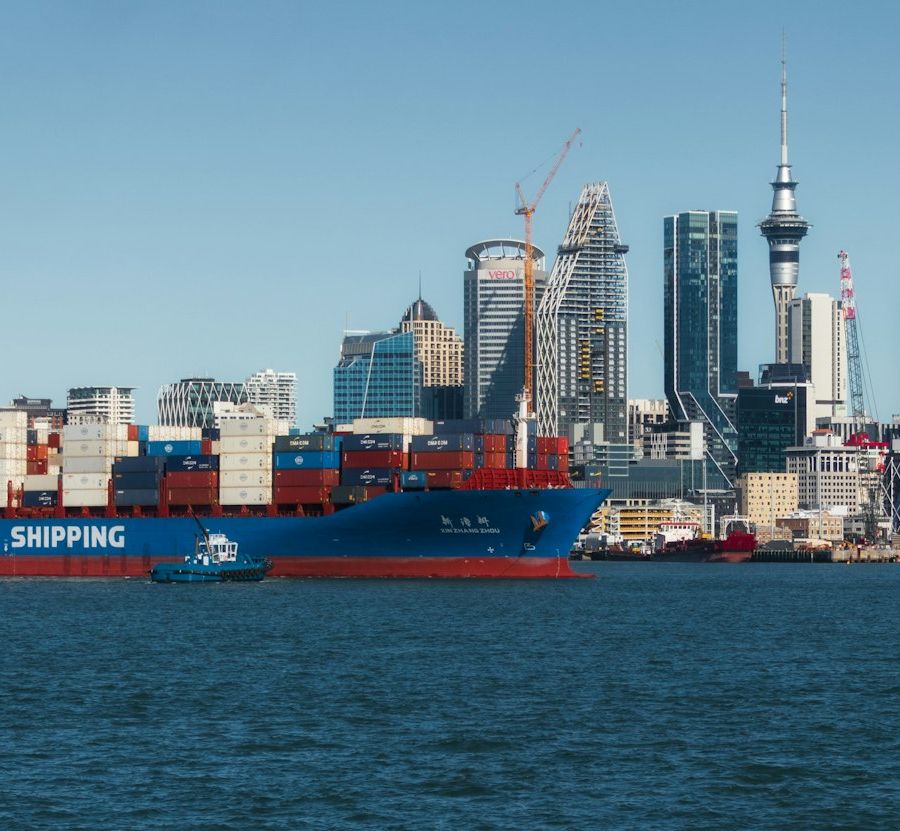
Importing is where a lot of young NZ brands find their margin. Buying direct from a manufacturer in China, Vietnam, India, Portugal or the US can transform your unit costs — but it asks for cash long before the goods are anywhere near a customer. You pay a deposit when production starts, a balance before the container leaves, and then freight, customs and GST when it lands. Only after that do you start selling.
Import order funding bridges that stretch so you can order the right quantity at the right time.
What does an import actually cost in cash terms?
Your supplier’s price is only the start. A realistic landed-cost budget includes:
- Supplier deposit — commonly a percentage up front when you confirm the order.
- Supplier balance — often due before shipping or against shipping documents.
- International freight and insurance — sea or air, depending on urgency and product.
- Customs charges — New Zealand Customs and biosecurity levies apply to import entries. Customs moved to a new “Goods Management Levies” model from 1 April 2026, which changed per-entry costs (sea imports went up, air imports came down) and introduced per-consignment charges for low-value goods (summary from EasyFreight).
- Duty — depends on the product’s tariff classification and country of origin.
- GST on imports — 15% GST is payable on imported goods (registered businesses can generally claim it back through their GST return, but you still need the cash on the day).
- Customs broker and local cartage — getting it from the port to your warehouse.
Our full guide to importing stock — deposits, freight timing and currency breaks each of these down.
Why timing matters more than the total
Most importers can afford the total cost of an order eventually. The problem is the sequence. A sea shipment from Asia can take several weeks on the water plus port and clearance time, and your supplier’s production time comes before that. Your cash is out the door for a couple of months or more before the first sale.
That’s why many importers prefer a line of credit: draw for the deposit, draw again for the balance, again for freight and customs, then repay as the goods sell. A lump-sum loan can work well if you’re paying for one big order in one go.
Two ways to fund an import
Unsecured funding or line of credit. For businesses usually trading six months or more, sized off turnover and bank statements. Weaker credit is considered and some decisions are same-day.
Property-secured loan. $20,000 to $1m secured on NZ property you or a supporting party already own — home, rental, commercial property or land — as a first or second mortgage. This suits first-time importers, larger orders, or businesses that want certainty weeks before the supplier’s deadline. No financials or tax returns are needed for the initial assessment.
Currency: the hidden variable
Most overseas suppliers invoice in US dollars, euros or yuan, so movements in the New Zealand dollar can change your landed cost between the deposit and the balance. Some importers fix a rate for the balance payment in advance through their bank or an FX provider; others pay the whole order up front to remove the uncertainty. Whichever you choose, build a buffer into your budget. (We’re not FX advisers — your bank or FX provider can explain the options.)
Checklist before you place the order
- Get a written pro-forma invoice with payment milestones.
- Confirm the Incoterm (for example FOB or EXW) so you know which freight costs are yours.
- Ask your customs broker for an estimate of duty, GST and levies.
- Plan where the stock will be stored when it lands.
- Line up funding before you pay the deposit, not halfway through.
Example scenario
Example scenario — generic and illustrative only. A Christchurch outdoor-gear brand is placing its first full-container order of insulated jackets with a factory overseas. The founder has traded for eight months, but the order is much larger than his usual monthly turnover. His parents offer their Canterbury home as security as supporting parties. A property-secured loan covers the deposit, balance and landed costs, and the founder plans to apply for an unsecured line of credit for future restocks once the business has more history.
Next step
Send a quick enquiry with your supplier timeline and rough landed cost. It’s free, takes about 60 seconds, and doesn’t affect your credit score. A lending specialist will call to map the funding to your payment milestones.